 Claude
  Perplexity
What Is Double Opt In And Why It Matters for Your Email List
Discover what is double opt in and how it works. Our guide explains why this method is crucial for building a quality email list and improving deliverability.
TL;DR: Discover what is double opt in and how it works. Our guide explains why this method is crucial for building a quality email list and improving deliverability.
Here’s the simple truth: Double opt-in is a two-step email subscription process where a new subscriber has to confirm their email address after they first sign up. Think of it as a digital handshake—you both have to be there. This simple confirmation step is your proof that the person genuinely wants to hear from you, which helps you build a more engaged and higher-quality list from day one.
Understanding the Double Opt-In Handshake
So, what is double opt-in, really? At its core, it’s just a respectful way to start a relationship with a new subscriber. Instead of instantly adding someone to your list the moment they fill out a form (that’s called single opt-in), you send them a quick confirmation email first. They only get officially added to your list after they click the verification link inside that email.
This extra step acts as a powerful filter. It weeds out typos, spam bots, and people who might have signed up on a whim but aren’t genuinely interested. It’s a proactive move toward building a much healthier and more responsive email list.
From Signup to Subscriber
Let’s walk through what the user actually experiences. The journey is pretty simple, but it’s crucial for marketers to get right. It really boils down to three key moments:
- The Initial Signup: A person finds your brand, likes what they see, and fills out your form to get a newsletter, a discount code, or maybe a free guide.
- The Confirmation Email: Almost instantly, an automated email lands in their inbox asking them to confirm they want to subscribe. This is that second “handshake.”
- The Final Confirmation: The user clicks the link in the email, which verifies their address and officially adds them to your mailing list.
This confirmation flow has become a cornerstone of modern, compliant email marketing, especially since regulations like GDPR require clear, explicit consent. If you want to dive deeper into the legal side, check out our detailed guide to GDPR email compliance.
This method ensures only genuinely interested users join your list, which directly impacts key performance metrics. While 10-35% of potential subscribers may drop off during this confirmation step, the remaining list is highly qualified, leading to fewer unsubscribes and spam complaints down the line.
Ultimately, this two-step verification sets the stage for much better engagement. Industry benchmarks show that double opt-in confirmation rates often fall somewhere between 65% to 90%, which proves that most real subscribers are more than willing to take that extra step. Discover more insights about these email marketing statistics on Nutshell.com.
How the Double Opt In Process Actually Works
So, what does double opt-in look like in the wild? It might sound a bit technical, but for the user, it’s a straightforward and transparent experience. The whole thing is designed to make sure they genuinely want to hear from you, turning a curious visitor into a confirmed subscriber.
Let’s walk through the exact journey someone takes from the moment they decide to join your email list. It’s a simple, trust-building dance with just a few steps.
Step 1: The Initial Signup
It all starts on your website, right at your signup form. A visitor likes what they see—maybe it’s a great piece of content, a discount, or an exclusive offer—so they type in their email and hit “Subscribe.”
Think of this as the first handshake. They’ve raised their hand and shown interest, but they aren’t officially on your list just yet. They’ve simply kicked off the process.
Step 2: The Confirmation Email
The second they hit that button, your system should automatically fire off a confirmation email to the address they provided. This email is the heart of the double opt-in process. Its only job is to ask one simple question: “Hey, was this really you, and do you want to get our emails?”
The subject line is usually something crystal clear, like “Confirm Your Subscription,” so there’s no confusion. Inside, there’s a big, can’t-miss-it link or button they need to click. This is your bouncer, filtering out typos, fake addresses, and pesky bots.
Step 3: The Final Verification
The user opens that email and clicks the confirmation link. This is the second, more important handshake—their explicit, undeniable consent. That single click verifies they own the email address and tells your email platform, “Yes, add me to the list. I’m in.”
From that moment on, they’re officially a subscriber, ready to receive your newsletters and campaigns. This two-step process is a powerful signal of high intent.
This simple three-stage journey—signup, confirmation, and verification—is the bedrock of a healthy, high-quality email list. It ensures every single person on it wants to be there, which immediately helps slash your bounce rates and protect your sender reputation.
This flow is actually pretty simple when you see it laid out.
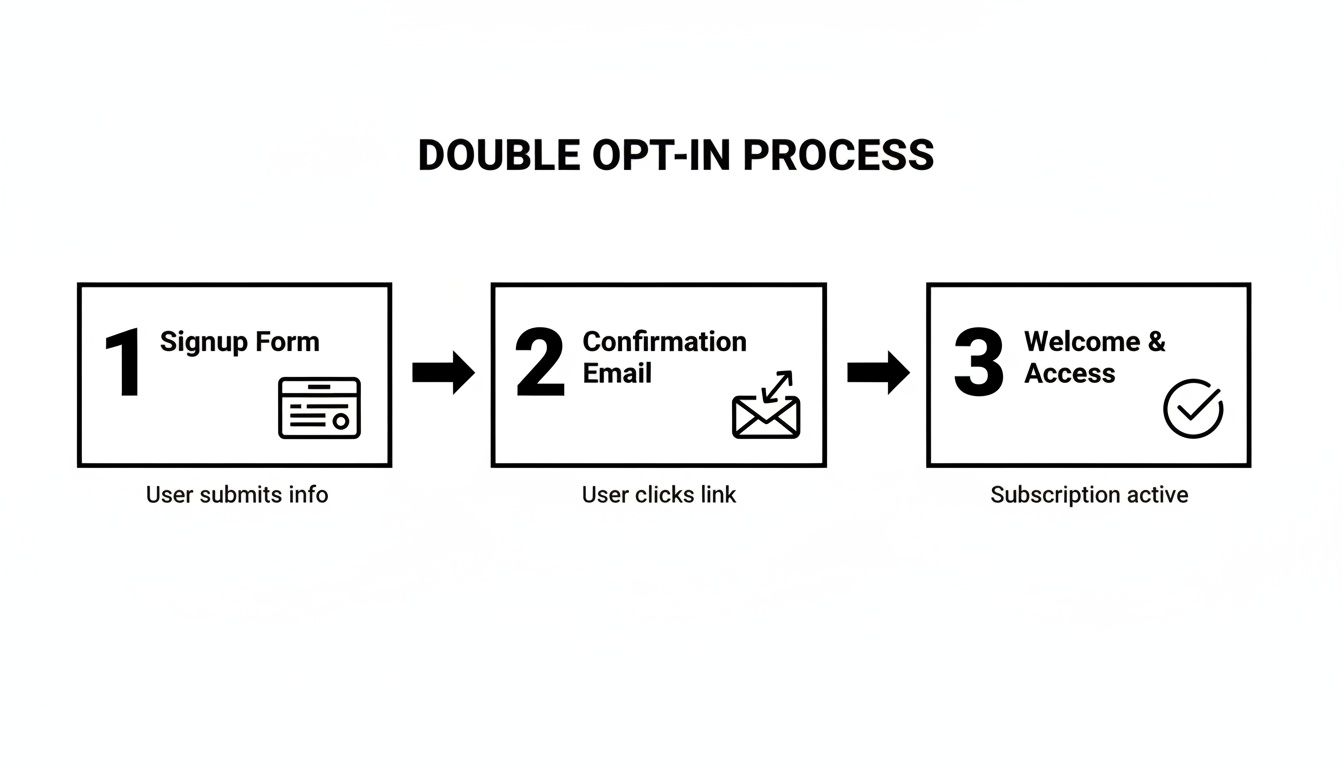
Each step naturally leads to the next, guiding a user from casual interest to becoming a fully engaged and confirmed member of your community.
The Real-World Payoff of Using Double Opt-In
So, why bother adding an extra step to your signup form? It seems counterintuitive, right? The truth is, that one little confirmation click delivers a massive payoff in list quality, deliverability, and legal protection that far outweighs any minor inconvenience for the user. Think of it as a quality control check for your most valuable marketing asset.
This simple confirmation step is a powerful filter. It ensures you’re building a list of people who are genuinely interested, not just drive-by visitors, bots, or someone who made a typo.

You’ll Build a Much Higher-Quality Email List
The most immediate benefit you’ll see is a dramatic improvement in your list’s overall health. Let’s be honest, single opt-in forms are magnets for typos, fake addresses, and even malicious spam traps designed to ruin your sender reputation.
By requiring that confirmation click, you automatically filter out all that junk. What you’re left with is a clean, curated list of real, active inboxes belonging to people who went out of their way to say, “Yes, I want to hear from you.” These are the folks who actually open, click, and eventually buy.
It Protects Your Sender Reputation and Boosts Deliverability
Email providers like Gmail and Outlook are always watching. They track how people engage with your emails, and things like high bounce rates or spam complaints are huge red flags. Too many of those, and you’re headed straight for the spam folder.
A double opt-in list naturally gives these providers all the right signals.
- Fewer Hard Bounces: Since every single email has been verified, you’ll practically eliminate bounces from non-existent addresses.
- Lower Spam Complaints: Someone who took the time to confirm their subscription is highly unlikely to turn around and mark you as spam.
- Higher Engagement: You’ll see better open and click-through rates, which tells email providers that your audience actually wants what you’re sending.
This creates a positive feedback loop that solidifies a strong sender reputation, making sure your emails consistently land where they belong: the inbox.
By putting a premium on a verified, high-intent audience, you’re not just growing a list—you’re building a foundation for sustainable email marketing success. The subscribers you keep are more valuable, more engaged, and far more likely to become loyal customers.
Recent data backs this up. Personalized campaigns sent to double opt-in lists can see 26% higher open rates. A clean, verified list typically achieves an average open rate of 24% and a 3.5% click-through rate, proving that quality absolutely trumps quantity.
It Strengthens Your Legal and Compliance Footing
In an age of tightening data privacy laws, proving consent isn’t just a good idea—it’s essential. Double opt-in is a huge advantage when it comes to complying with regulations like GDPR, as you can see in these GDPR compliance policies.
This two-step process creates a bulletproof digital paper trail. You have the initial signup form submission and, crucially, a timestamped record of the confirmation click. This gives you clear, undeniable proof that every single subscriber explicitly consented to receive your emails, building trust and keeping you on the right side of the law from day one.
Tackling the Downsides and Common Worries
So, while double opt-in sounds great on paper, let’s be real about the potential hang-ups. The biggest one marketers worry about? Slowing down list growth. It’s a totally fair concern. If you add an extra step, it’s inevitable that some people will drop off before finishing.
But I think that’s the wrong way to look at it. This isn’t about losing subscribers; it’s about building a better, more engaged list from the start.
The people who don’t bother to click that confirmation link? They’re often the ones who used a fake email, made a typo, or weren’t that interested in the first place. These are the same people who would likely ignore your emails or mark them as spam down the road.
Think of it this way: you aren’t losing leads, you’re filtering for commitment. This is your first and best chance to make sure every single person on your list actually wants to hear from you.
“What if the Confirmation Email Gets Lost?”
This is the other big fear I hear all the time. What if that crucial confirmation email ends up in the spam folder or just gets buried in a cluttered inbox? It’s a real risk, but one you can get ahead of with a few smart moves.
That first confirmation email is one of the most important messages you’ll ever send to a new subscriber. It needs to land in the inbox, no excuses.
Here’s how you can make sure it gets there:
- Use a Real Sender Name: Don’t send from a generic “no-reply” address. Use your brand name or even a person’s name from your team. It’s instantly more recognizable and trustworthy.
- Write a Super-Clear Subject Line: Get straight to the point. Something like “Action Required: Confirm Your Subscription to [Your Brand]” cuts through the noise and tells them exactly what to do. No fluff, no sales pitch.
- Nail Your Authentication: Make sure your technical setup is solid. This means having your SPF and DKIM records configured properly. These act like a digital passport, telling inbox providers like Gmail and Outlook that you are who you say you are.
By treating this email as the critical first impression it is, you can dramatically increase your confirmation rates. You’re not just avoiding a problem; you’re turning that initial signup into a smooth, professional welcome.
How to Implement Double Opt-In Like a Pro
Flipping the switch on double opt-in is easy. The real magic happens when you make it a smooth, natural part of your new subscriber’s journey. While the exact steps will differ, most of the best email marketing services and platforms have this baked right into their settings, often as a simple checkbox.
Once you’ve got it turned on, your job is to fine-tune the confirmation process. Think of this as the first real handshake with your new contact—don’t just rely on the dull, generic messages your email provider gives you. This is your chance to make a great first impression.

Crafting the Perfect Confirmation Email
Your confirmation email has one very specific mission: get the click. Every single element, from the subject line to the button color, needs to guide the user toward that one action. Get straight to the point and let your brand’s personality shine through.
Start with a subject line they can’t possibly misinterpret. This isn’t the time for witty marketing copy; clarity is king.
- Good: “Action Required: Confirm Your Subscription”
- Better: “Just One More Step to Get Your Free Guide!”
Inside the email, less is more. Gently remind them why they signed up in the first place, reinforce the value they’re about to receive, and make your call-to-action button impossible to miss. Use direct, action-focused text like “Confirm My Subscription” or “Yes, I’m In!” instead of a generic “Click Here.”
This first email sets the tone for your entire relationship. A clear, branded, and helpful confirmation message tells subscribers you are professional and respect their time, building trust from the very first interaction.
Optimizing Your Thank You Page
So, they’ve clicked the link. Where do they go next? A generic “You’re subscribed” page is a massive missed opportunity. This is prime real estate to welcome them properly and point them in the right direction.
Here are a few ways to put your thank you page to work:
- Deliver the Goods: If you promised a lead magnet like an ebook or a discount code, give it to them right away.
- Set Expectations: Let them know what’s coming next. Tell them what kind of emails you’ll be sending and how often they can expect to hear from you.
- Keep the Conversation Going: Invite them to follow you on social media or check out some of your most popular articles.
This final step closes the loop, turning a technical requirement into a genuinely warm welcome. A solid setup doesn’t just get you a confirmed subscriber; it kicks off the relationship on a positive note. To make this process even tighter, many businesses also use a valid email API to catch typos and invalid addresses right at the signup form, ensuring only high-quality contacts even enter the confirmation flow.
Why Email Validation Is Still Crucial
While double opt-in is a fantastic first line of defense, it isn’t a silver bullet for perfect list hygiene. Think of it as a bouncer checking IDs at a club; it confirms someone genuinely wants to get in, but it doesn’t tell you if they’re going to cause trouble later.
Double opt-in is brilliant at verifying a subscriber’s intent and making sure a real person has access to that inbox. But it can’t catch everything. A user can still happily click that confirmation link using a risky or low-quality email address.
This is where the process hits its limits. A confirmation click won’t stop:
- Disposable Emails: Those temporary addresses people use to grab a discount or a freebie, only to vanish forever.
- Role-Based Addresses: Emails like
info@orsupport@often have low engagement rates and can be shared by multiple people. - Spam Traps: Even a real-looking email could be an old, recycled address now used by inbox providers to identify and block spammers.
Layering Validation for a Bulletproof Strategy
This is exactly why layering email validation on top of your double opt-in process is non-negotiable for serious marketers. If double opt-in is the bouncer, then an email validation service is the expert security guard who runs a background check. It goes much deeper, analyzing the technical health and history of an email address before it ever gets a welcome email.
Even after a subscriber confirms their interest, running your list through a validation service like Truelist will identify and flag these problematic addresses. This two-pronged approach ensures your list is clean on two distinct levels: subscriber intent and technical validity. To get a deeper understanding of this process, you can explore the fundamentals of email address validation in our detailed guide.
This combined strategy of double opt-in plus validation is the gold standard for professionals who are serious about their email program’s performance. It’s not about being redundant; it’s about being thorough to protect your most valuable asset.
This dual approach has become standard practice for savvy pros navigating a world of 347 billion daily emails. In fact, bounce rates can be halved when combining double opt-in with validation, which is crucial for achieving an email marketing ROI of $36-$42 for every dollar spent. It’s a small investment that pays huge dividends by safeguarding your sender reputation and maximizing the impact of every single email you send. Learn more about these crucial email marketing statistics on Porch Group Media.
Got Questions? We’ve Got Answers
Even when you’ve got the basics down, a few practical questions always pop up when you’re deciding if double opt-in is the right move for your email list. Let’s tackle some of the most common ones we hear from marketers.
Is Double Opt-In a Legal Must-Have Everywhere?
Not everywhere, no. There isn’t a single law that makes it mandatory across the globe. But—and this is a big but—it’s considered the gold standard for complying with tough privacy laws like GDPR in Europe.
While US laws like CAN-SPAM don’t demand it, double opt-in gives you undeniable, provable consent. Think of it as your best defense. It shows you have a clear record of someone saying “yes, I want your emails,” which is a universally respected best practice that protects your business from spam complaints.
Adopting double opt-in isn’t just about ticking a legal box. It’s a strategic decision that sends a powerful message to subscribers and email providers: you’re a trustworthy sender focused on building genuine, consent-based relationships.
Can I Switch My Old List Over to Double Opt-In?
You absolutely can! In fact, it’s a fantastic way to breathe new life into an older single opt-in list and scrub it clean. The best way to do this is by running a re-engagement or re-confirmation campaign.
It’s simple, really. You send a dedicated email to your current subscribers asking them to confirm they still want to hear from you by clicking a link. This move pulls double duty:
- It weeds out all the inactive, uninterested, and old email addresses, cutting down on list bloat.
- It refreshes your records with explicit, fresh consent from your most loyal followers.
Anyone who doesn’t click to confirm can be safely removed. The result? Better deliverability, higher engagement, and a much healthier list.
What’s a Good Confirmation Rate to Aim For?
For a brand new double opt-in process, a solid confirmation rate usually lands somewhere between 70% and 90%. Of course, this can vary a bit depending on your industry, audience, and where your traffic is coming from.
If you see your rate falling below that benchmark, it’s a signal that something in your signup process could use a tune-up. Take a look at the messaging on your signup form—are you clearly telling people they need to check their inbox? You could also try tweaking the subject line of your confirmation email to make it more urgent and compelling.
Ready to make sure every email goes to a real, interested person? Truelist provides unlimited, no-fuss email validation that works hand-in-hand with your double opt-in strategy. Clean your list, protect your sender reputation, and watch your campaign results climb. Start validating for free today at truelist.io.