 Claude
  Perplexity
10 Sales Prospecting Best Practices to Master in 2025
Discover the top 10 sales prospecting best practices for 2025. Boost your outreach with expert tips on data hygiene, ABM, social selling, and more.
TL;DR: Discover the top 10 sales prospecting best practices for 2025. Boost your outreach with expert tips on data hygiene, ABM, social selling, and more.
In today’s competitive landscape, sticking to outdated sales prospecting methods is a surefire way to fall behind. Prospects are more informed, guarded, and overwhelmed than ever. The old playbook of high-volume, low-personalization outreach simply doesn’t cut it anymore. Your prospects’ inboxes are crowded, their time is limited, and their tolerance for generic messages is zero. If you’re still relying on tactics that treat prospecting as a pure numbers game, you’re not just wasting effort, you’re actively damaging your brand’s reputation with every ignored email.
To break through the noise, you need a modern strategy built on precision, personalization, and genuine value. Success today depends on understanding your Ideal Customer Profile (ICP) deeply, engaging with prospects where they are, and delivering the right message at precisely the right moment. It requires a multi-channel approach that blends technology with human insight. When considering why your old prospecting playbook is gathering dust, it’s worth exploring a guide to B2B Lead Generation That Actually Works with modern, interactive approaches.
This guide cuts through the fluff and details the definitive sales prospecting best practices that top-performing SDRs and email marketers are using to not just meet, but exceed their quotas. We’ll explore ten powerful, actionable strategies that will help you build a robust and predictable pipeline. From leveraging intent data and social selling to mastering the art of the warm referral, you’ll find the specific, practical details needed to refine your process. Let’s dive in and transform your outreach from a game of chance into a science of success.
1. Account-Based Marketing (ABM)
Account-Based Marketing (ABM) is a strategic approach that flips the traditional sales funnel on its head. Instead of casting a wide net to capture as many leads as possible, ABM focuses your sales and marketing resources on a curated list of high-value target accounts. This methodology treats each account as a market of one, demanding deep personalization and a coordinated multi-channel effort. It stands as one of the most effective sales prospecting best practices because it prioritizes quality over quantity, leading to larger deal sizes and higher ROI.

This hyper-targeted strategy ensures every outreach is relevant, resonant, and aligned with the specific business challenges of the target account. Companies like Salesforce have mastered this by tailoring their enterprise solutions and messaging to the unique operational needs of major corporations, resulting in significant contract wins.
How to Implement an ABM Strategy
Successfully launching an ABM initiative requires tight alignment between sales and marketing teams and a commitment to data-driven decision-making. The goal is to create a seamless and highly personalized experience for every stakeholder within the target account.
Here are actionable steps to get started:
- Identify & Prioritize High-Value Accounts: Work with sales to define your Ideal Customer Profile (ICP) and establish clear criteria for account qualification. Use account intelligence tools like ZoomInfo or Apollo.io to build a list of target companies that fit this profile perfectly.
- Map Key Stakeholders: Within each target account, identify the key decision-makers, influencers, and potential blockers. Develop detailed buyer personas for these individuals, understanding their roles, pain points, and motivations.
- Craft Customized Messaging: Generic outreach won’t work. Create bespoke value propositions and content that speak directly to the target account’s specific industry, challenges, and strategic goals. Reference their company news, case studies, or recent achievements.
- Coordinate Multi-Channel Outreach: Align your efforts across email, phone calls, LinkedIn messages, and even targeted advertising. A prospect might ignore an email but engage with a relevant ad or InMail message, making a synchronized approach crucial.
- Measure and Optimize: Track engagement metrics at the account level, not just the individual lead level. Monitor metrics like account penetration (how many key contacts you’ve engaged), meeting rates, and pipeline velocity for your target list.
2. Social Selling
Social selling is a modern prospecting methodology that leverages social media platforms to find, connect with, and nurture sales prospects. Instead of relying on traditional cold outreach, sales professionals use networks like LinkedIn and Twitter to build genuine relationships, provide value, and establish themselves as trusted advisors. This approach is one of the most crucial sales prospecting best practices because it warms up potential leads by establishing credibility before a direct sales pitch is ever made.

This strategy allows you to engage prospects in their own environment where they are already sharing their challenges and needs. Sales professionals who master social selling, like those using LinkedIn Sales Navigator, often see significantly higher engagement and response rates because their outreach is contextual and relationship-driven, not interruptive.
How to Implement a Social Selling Strategy
An effective social selling strategy is about playing the long game. It requires patience, authenticity, and a commitment to providing value upfront. The goal is to become a familiar, credible resource for your target audience, making them more receptive to a conversation.
Here are actionable steps to get started:
- Optimize Your Professional Profile: Your LinkedIn profile is your digital storefront. Ensure it has a professional headshot, a benefit-driven headline (e.g., “Helping SaaS companies reduce churn”), and a summary that clearly articulates your value proposition.
- Engage Authentically with Prospects: Before sending a connection request, interact with your prospect’s content. Like, comment on, or share their posts with a thoughtful insight. This simple act makes your name familiar when you eventually reach out.
- Share Valuable Content Regularly: Position yourself as an industry expert by consistently sharing relevant articles, insights, and case studies. This builds your personal brand and attracts inbound interest from potential buyers.
- Use Platform-Specific Tools: Leverage tools like LinkedIn Sales Navigator to identify key decision-makers with advanced search filters, track account changes, and receive lead recommendations based on your ideal customer profile.
- Personalize Connection Requests: Ditch the generic template. Reference a mutual connection, a piece of content they shared, or their involvement in a specific group. A personalized invitation is far more likely to be accepted.
3. Cold Email Outreach
Cold Email Outreach remains a powerful and scalable method for connecting with prospects who have no prior relationship with your brand. It involves sending a direct, personalized email to initiate a conversation with the goal of booking a meeting or generating interest. In the modern sales landscape, this technique has evolved from generic mass blasts to highly targeted, value-driven communication, making it one of the most effective sales prospecting best practices when executed correctly.
The success of a cold email hinges on relevance and personalization. It’s not about selling your product in the first email; it’s about starting a meaningful dialogue by demonstrating you understand the prospect’s challenges. Companies like Lemlist showcase case studies with over 50% response rates by leveraging deep personalization, proving that a well-crafted message can cut through the noise and build enterprise pipelines from scratch.
How to Implement a Cold Email Outreach Strategy
A successful cold email campaign is a science, combining compelling copywriting, strategic sequencing, and a commitment to data analysis. The aim is to provide value upfront and make it easy for the prospect to see why a conversation would be worthwhile.
Here are actionable steps to get started:
- Write Compelling Subject Lines: Your subject line is the gatekeeper. Make it specific, intriguing, and short. Avoid clickbait and focus on relevance, such as “Question about [Prospect’s Company] goal” or “Idea for improving [Specific Metric].”
- Personalize Beyond the First Name: Reference a recent company announcement, a LinkedIn post they wrote, or a mutual connection. This shows you’ve done your homework and aren’t just sending a template to thousands of people.
- Focus on Prospect Value: Keep the initial email concise (under 125 words) and centered on the prospect’s potential benefit, not your product’s features. Frame your value proposition as a solution to a problem they likely face.
- Include a Clear Call-to-Action (CTA): End with a single, low-friction question. Instead of “Are you free to chat next week?”, try an interest-based CTA like, “Is this something you’re currently focused on?”
- Develop a Follow-Up Sequence: Most replies come from follow-up emails. Plan a multi-touch sequence of 3-5 emails spread over a few weeks, providing new value with each message. For more in-depth guidance, explore these cold email best practices.
4. Referral and Warm Introduction Strategy
A Referral and Warm Introduction Strategy is a powerful approach that leverages your existing network to generate high-quality leads. Instead of relying solely on cold outreach, this method involves asking satisfied customers, partners, and professional connections for introductions to potential prospects. This transforms a cold call into a warm, trusted conversation, dramatically increasing the likelihood of engagement and conversion. It’s one of the most effective sales prospecting best practices because it bypasses gatekeepers and establishes immediate credibility.
This strategy hinges on the principle of social proof; a recommendation from a trusted source is far more persuasive than any marketing message. SaaS companies often generate over 30% of their new business pipeline from referrals alone, while consulting firms frequently use client referrals as their primary growth engine, showcasing the immense ROI of this approach.
How to Implement a Referral and Warm Introduction Strategy
Building a successful referral program requires a proactive, systematic approach rather than passively waiting for introductions. The goal is to make it easy and rewarding for your network to connect you with qualified prospects who fit your Ideal Customer Profile (ICP).
Here are actionable steps to get started:
- Develop a Formal Referral Program: Don’t leave referrals to chance. Create a structured program with clear incentives, such as gift cards, service discounts, or commission-based rewards. Platforms like Influitive can help automate and manage this process.
- Identify and Prime Your Advocates: Regularly review your satisfied customers and well-connected professional contacts. Nurture these relationships so that when you ask for a referral, they are happy to help.
- Make the “Ask” Easy and Specific: Never ask, “Do you know anyone who might need our services?” Instead, be specific: “We’re looking to connect with VPs of Marketing at B2B SaaS companies in the fintech space. Does anyone in your network come to mind?” This helps them pinpoint the right people.
- Create Referral Templates: Provide your advocates with pre-written email or LinkedIn message templates they can easily forward. This removes the friction and effort required to make an introduction, significantly increasing your success rate.
- Track, Acknowledge, and Reward: Use your CRM to track the source of every referral. Always follow up to thank your referral source, provide feedback on the outcome, and promptly deliver any promised rewards. This encourages repeat referrals.
5. LinkedIn Prospecting and Advanced Search
LinkedIn Prospecting is the art of leveraging the world’s largest professional network to identify, research, and engage with potential customers. Instead of cold calling or emailing with limited context, this method uses LinkedIn’s powerful search tools, especially Sales Navigator, to pinpoint ideal prospects based on detailed firmographic and demographic data. This approach is a cornerstone of modern sales prospecting best practices because it allows for a highly informed and personalized outreach based on a prospect’s professional activity, connections, and content.
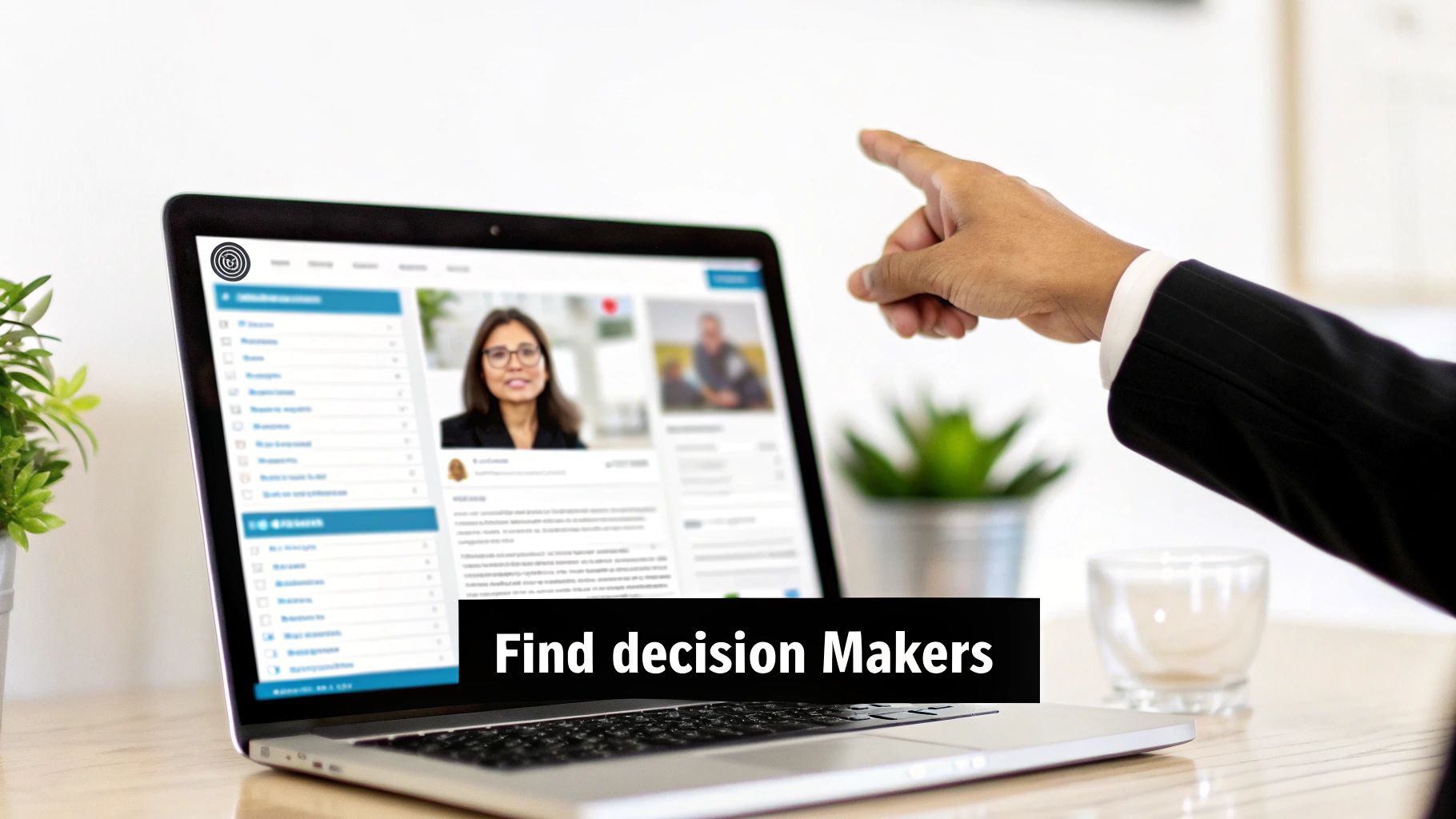
This strategy provides a rich source of real-time intelligence that goes far beyond a name and a title. Tech sales teams often build their entire pipelines on the platform, and B2B companies consistently report that a significant portion of their sales pipeline originates from these targeted LinkedIn efforts.
How to Implement LinkedIn Prospecting
Effective LinkedIn prospecting is about building relationships and providing value before asking for a meeting. It requires a strategic blend of research, engagement, and personalized communication, moving beyond simple connection requests.
Here are actionable steps to get started:
- Leverage Sales Navigator: Invest in Sales Navigator for its advanced search filters, including company size, industry, job function, seniority level, and recent job changes. Create saved searches and lead lists to get alerts on prospect activity.
- Research Before Reaching Out: Review a prospect’s profile activity, recent posts, and shared content. Note their interests, professional achievements, and any shared connections, which can be used to create a warm, relevant opening.
- Engage Authentically: Before sending a connection request or InMail, engage with the prospect’s content. Like or comment thoughtfully on their posts to build familiarity and show genuine interest in their work.
- Craft Personalized InMail: Avoid generic templates. Reference a specific post they shared, a mutual connection, or a recent company announcement in your message. Keep it concise and focused on how you can provide value to them.
- Track and Integrate: Use a CRM integration to log your LinkedIn activities, ensuring your interactions are part of the overall account record. This prevents siloed communication and provides a complete view of your prospecting efforts.
6. Inbound Marketing and Content-Driven Prospecting
Inbound Marketing and Content-Driven Prospecting is a strategic approach that attracts potential customers by creating valuable content and experiences tailored to them. Instead of interrupting prospects with unsolicited outreach, this method draws them in by addressing their pain points and offering solutions, positioning your company as a trusted authority. It is one of the most powerful sales prospecting best practices because it generates warmer, more qualified leads who are already engaged and interested in your expertise.
This methodology focuses on building relationships and establishing credibility long before a sales conversation begins. Companies like HubSpot pioneered this approach, using their blog, educational guides, and free tools to build a massive audience and generate a steady stream of high-quality leads, proving that valuable content can be the most effective salesperson.
How to Implement a Content-Driven Prospecting Strategy
A successful inbound strategy requires a deep understanding of your ideal customer’s journey and a commitment to consistently producing high-quality, relevant content. The goal is to be the go-to resource for prospects as they research their challenges and potential solutions. For a deeper dive into content marketing strategies that can fuel your prospecting efforts, explore these valuable resources on content marketing best practices.
Here are actionable steps to get started:
- Create Content for Each Buyer Stage: Develop blog posts, white papers, and webinars that address the specific questions and pain points prospects have at the awareness, consideration, and decision stages of their journey.
- Develop Lead Magnets: Offer valuable, gated content like e-books, templates, or exclusive research reports in exchange for a prospect’s contact information. This is a fundamental step in converting anonymous website visitors into known leads. To learn more, explore these tips on how to build email lists.
- Optimize for Search Visibility (SEO): Research the keywords and phrases your target audience uses to find solutions. Optimize your content around these terms to ensure it appears in search engine results, driving organic traffic and leads.
- Nurture Inbound Leads: Use marketing automation to send targeted follow-up content to leads based on their interests and behaviors. This keeps your brand top-of-mind and guides them through the sales funnel until they are ready to speak with a representative.
- Implement Lead Scoring: Assign points to leads based on their demographic information and on-site engagement (e.g., pages visited, content downloaded). This system helps sales prioritize outreach to the most qualified, sales-ready prospects.
7. Phone-Based and Voice Prospecting
In an era dominated by digital communication, phone-based and voice prospecting remains a powerful, direct line to decision-makers. This strategy involves direct phone outreach, whether through cold calling, warm calling with prior context, or following up on digital engagement. It is one of the most resilient sales prospecting best practices because it adds a human element to outreach, allowing for real-time conversation, immediate objection handling, and genuine rapport building that email alone cannot replicate.
This method cuts through the noise of crowded inboxes and automated messages, offering a personal touch that can significantly accelerate the sales cycle. Sales training organizations like Sandler and methodologies such as the Challenger Sale have long championed consultative calling as a way for high-ticket B2B sales teams to close complex deals by guiding conversations and providing value.
How to Implement Phone-Based and Voice Prospecting
Effective voice prospecting is less about a script and more about a structured, empathetic conversation. The goal is to connect, understand the prospect’s challenges, and establish a clear next step, not to close the deal on the first call.
Here are actionable steps to improve your calling strategy:
- Research Before You Dial: Never make a completely “cold” call. Spend five minutes reviewing the prospect’s LinkedIn profile, company news, and role. This allows you to open the conversation with relevant context instead of a generic pitch.
- Develop a Clear Value Proposition: Be able to articulate what you do and the problem you solve in 15 seconds or less. Your introduction should be concise, confident, and focused entirely on the prospect’s potential benefit.
- Use Open-Ended Questions: Steer the conversation away from a monologue by asking questions that encourage detailed responses (e.g., “What’s your biggest challenge with…?” instead of “Do you have a challenge with…?”). This uncovers pain points and qualifies the prospect.
- Handle Objections with Empathy: Instead of defending, listen to objections and respond with curiosity. Phrases like “That’s a fair point, can you tell me more about that concern?” can turn a rejection into a deeper conversation.
- Focus on Scheduling the Next Step: The primary goal of a prospecting call is often to secure a more formal meeting. Have a specific, limited ask, such as “Would you be open to a 15-minute discovery call next Tuesday to explore this further?”
8. Event-Based Prospecting and Networking
Event-based prospecting leverages industry conferences, trade shows, and webinars as powerful platforms for direct engagement. This approach moves beyond digital-only outreach, allowing you to connect with highly relevant prospects in a context where they are actively seeking solutions and insights. It’s a key component of a well-rounded strategy because it combines targeted outreach with invaluable face-to-face relationship-building, making it one of the most impactful sales prospecting best practices.
This method allows for immediate qualification and rapport building that is difficult to replicate through email or phone calls alone. Events like Salesforce’s Dreamforce or a major industry trade show create a concentrated pool of your Ideal Customer Profile, presenting a unique opportunity to accelerate the sales cycle by meeting decision-makers directly.
How to Implement Event-Based Prospecting
Maximizing your return from an event requires meticulous planning before, during, and after. The goal is to move from passive attendance to active, strategic engagement that generates qualified meetings and pipeline.
Here are actionable steps to get started:
- Pre-Event Intelligence & Outreach: Research the attendee list and identify your top-tier prospects beforehand. Reach out to schedule brief, specific meetings in advance, referencing a shared interest in a particular session or topic to personalize your request.
- Develop a Clear Value Proposition: Craft a concise, compelling elevator pitch that clearly articulates the problem you solve and for whom. Your team should be able to deliver this message confidently in under 30 seconds.
- Utilize Event Technology: Use the event’s mobile app for networking and lead capture tools like badge scanners to efficiently gather contact information. This ensures no lead is lost and follow-up is streamlined.
- Execute Rapid, Specific Follow-Up: Connect with new contacts on LinkedIn and send a personalized follow-up email within 24-48 hours. Reference a specific point from your conversation to jog their memory and propose a clear next step, such as a brief discovery call.
- Measure Event ROI: Track the leads generated from the event through your CRM. Monitor how many of these contacts convert into meetings, opportunities, and ultimately, closed-won deals to accurately measure the event’s impact on revenue.
9. Intent Data and Predictive Analytics
Intent Data and Predictive Analytics leverage technology to identify prospects actively showing buying signals and interest in your solutions before they ever reach out. This approach analyzes vast amounts of online behavior, such as search patterns, content consumption, and website visits, to predict when an account is most likely to purchase. This makes it one of the most powerful sales prospecting best practices because it allows you to engage prospects at the peak of their interest with timely, relevant outreach.
This proactive strategy shifts your team from reactive follow-ups to strategic, data-informed engagement. Companies like 6sense and Demandbase use intent signals to help sales teams prioritize accounts demonstrating purchase intent, dramatically improving conversion rates and shortening sales cycles by focusing efforts where they matter most.
How to Leverage Intent Data and Predictive Analytics
Implementing an intent-driven strategy requires integrating specialized data platforms with your existing sales and marketing stack. The goal is to surface in-market accounts and deliver highly contextual messages based on their recent activities and research topics.
Here are actionable steps to get started:
- Integrate Intent Data Sources: Start by capturing first-party intent from your own website, such as pricing page visits or content downloads. Supplement this with third-party data from platforms like ZoomInfo or 6sense to get a comprehensive view of an account’s research across the web.
- Create High-Intent Alerts: Set up automated alerts within your CRM or sales engagement platform to notify reps immediately when a target account shows a spike in intent. This could be triggered by researching your competitors or specific keywords related to your solution.
- Prioritize and Personalize Outreach: Use intent signals to prioritize which accounts to contact first. Tailor your messaging based on the specific topics they are researching. For example, if an account shows intent around “data security,” lead with how your solution addresses that pain point.
- Combine with Verified Contact Data: Intent data tells you which account is interested, but you still need accurate contact information. Combining intent signals with a strong process for email address validation ensures your high-priority messages actually reach the right inbox, protecting your sender reputation.
- Measure and Refine: Track the correlation between specific intent signals and closed deals. Analyze which topics are the strongest predictors of a sale and adjust your predictive scoring model and outreach strategies accordingly to continuously improve performance.
10. Partnership and Channel Prospecting
Partnership and channel prospecting is a powerful strategy that expands your reach by leveraging the established relationships of complementary businesses. Instead of going directly to a cold market, you collaborate with companies, resellers, or consultants who already serve your ideal customer profile. This approach taps into a pre-built foundation of trust, allowing you to access warm introductions and highly qualified prospect pools. This method is one of the most scalable sales prospecting best practices because it builds a network of advocates who generate leads on your behalf.
This indirect sales model uses credibility by association to accelerate the sales cycle. For instance, HubSpot’s Solutions Partner Program enables marketing agencies to resell its software while providing services, creating a mutually beneficial ecosystem that drives significant revenue and market penetration for both HubSpot and its partners.
How to Implement a Partnership and Channel Strategy
Building a successful partner program requires a strategic framework that incentivizes collaboration and provides partners with the tools they need to succeed. The goal is to create a win-win relationship where partners are motivated to introduce your solution to their clients.
Here are actionable steps to get started:
- Identify Ideal Partners: Look for companies that offer complementary, non-competing services or products to the same target audience. Technology consulting firms, marketing agencies, and industry-specific software vendors are common examples.
- Develop a Compelling Value Proposition: Clearly define what’s in it for them. Offer referral fees, revenue sharing, co-marketing opportunities, or access to your customer base. A strong incentive structure is crucial for recruitment and motivation.
- Provide Comprehensive Enablement: Don’t just sign up partners and expect results. Equip them with thorough training on your product, ideal customer profile, and sales process. Provide them with marketing collateral, case studies, and demo materials.
- Establish Clear Lead Handling Processes: Define the rules of engagement for lead submission, qualification, and follow-up to avoid channel conflict. Use a Partner Relationship Management (PRM) system to track referrals and manage commissions transparently.
- Foster Strong Relationships: Treat your partners as an extension of your sales team. Maintain regular communication through newsletters, webinars, and one-on-one check-ins. Share customer success stories and celebrate joint wins to keep them engaged.
Top 10 Sales Prospecting Comparison
| Method | 🔄 Implementation complexity | ⚡ Resource requirements | ⭐ Expected outcomes | 💡 Ideal use cases | 📊 Key advantages |
|---|---|---|---|---|---|
| Account-Based Marketing (ABM) | High — extensive account research, cross-team coordination | High — CRM/ABM platforms, dedicated sales & marketing resources | High-quality pipeline, larger deal sizes, stronger ROI | Enterprise B2B, high-value accounts, long sales cycles | Personalized one-to-one engagement; efficient resource allocation |
| Social Selling | Medium — consistent presence and relationship building | Moderate — time for content, social tools and engagement effort | Improved engagement and warmer leads over time | Relationship-driven sales, SMB/B2B, thought-leadership roles | Low-cost credibility building; prospect research before outreach |
| Cold Email Outreach | Medium — sequence design, deliverability and compliance management | Low–Moderate — automation tools, copywriting resources | Scalable lead volume with variable reply rates | High-volume outreach, quick pipeline creation across industries | Highly scalable and measurable; low cost per contact |
| Referral & Warm Introductions | Low–Medium — program design and relationship management | Low — leverage existing customers/networks; incentive costs | Very high conversion and shortest sales cycles | Customer-success businesses, service firms, local networks | Trust-based leads with low CAC and high lead quality |
| LinkedIn Prospecting & Advanced Search | Medium — platform mastery and targeted outreach workflows | Moderate — Sales Navigator subscription, research time | High-quality B2B prospects and good response rates | B2B sales, recruiters, executive-level outreach | Direct access to decision-makers with rich profile data |
| Inbound Marketing & Content-Driven Prospecting | High — content strategy, SEO, automation and lead-nurture flows | High — content creators, SEO tools, marketing automation | Sustainable, qualified lead flow and stronger brand authority | SaaS, long-term brand building, education-driven markets | Continuous lead generation; lowers CPL over time |
| Phone-Based & Voice Prospecting | Medium — call scripts, compliance, real-time sales skills | High — time-intensive human effort, telephony/recording tools | High engagement and fast qualification | High-ticket B2B, consultative sales, industries receptive to calls | Real-time objection handling and strong rapport building |
| Event-Based Prospecting & Networking | High — event planning, logistics, targeted pre/post workflows | High — registration, travel, booth/staffing and follow-up costs | High-quality leads and strong brand visibility at events | Conferences, trade shows, product demos, executive meetings | Face-to-face trust-building and concentrated decision-maker access |
| Intent Data & Predictive Analytics | High — data integration, modeling, and alerting systems | High — intent providers, analytics expertise, integration work | Better prioritization, increased conversion velocity | Data-driven sales orgs, ABM programs, large account focus | Timely buying signals and data-driven lead prioritization |
| Partnership & Channel Prospecting | Medium–High — partner recruitment, enablement and governance | Moderate — partner programs, co-marketing resources, incentives | Expanded reach and recurring revenue through partners | Companies with complementary ecosystems, SaaS marketplaces | Access to partner customer bases and scalable channel growth |
Unify Your Strategy for Unstoppable Growth
We’ve explored a comprehensive arsenal of modern sales prospecting techniques, from the precision targeting of Account-Based Marketing to the trust-building power of social selling and the direct impact of cold email outreach. Each method, whether it’s leveraging intent data, seeking warm referrals, or mastering LinkedIn’s advanced search, offers a unique pathway to connect with your ideal customer. However, the true masters of the craft understand that these strategies are not isolated tactics to be used in a vacuum. The secret to building a truly unstoppable growth engine lies in integration and synthesis.
The most successful sales development representatives don’t just pick one method; they weave them together into a cohesive, multi-channel approach. A powerful sequence might start with identifying a high-value account (ABM), followed by connecting with key decision-makers on LinkedIn (Social Selling), and then launching a highly personalized, multi-touch email campaign (Cold Email Outreach). This layered strategy creates multiple points of contact, building familiarity and trust far more effectively than a single-threaded approach ever could. Implementing these sales prospecting best practices in concert transforms your outreach from a series of disjointed actions into a strategic, orchestrated engagement.
The Foundational Pillar: Data Integrity
Beneath every successful prospecting initiative, from the most sophisticated predictive analytics model to the simplest cold call, lies a non-negotiable foundation: clean, accurate, and verified data. You can craft the most compelling email in the world, but if it’s sent to a non-existent address, your effort is wasted. Worse, it actively damages your sender reputation, making it harder for all your future emails to reach their intended inboxes.
This is where the principles of data hygiene and email validation become paramount. Before you press “send” on any campaign or dial any number, you must have confidence in your contact list. Poor data leads to:
- High Bounce Rates: Immediately signaling to email providers that you are a low-quality sender.
- Wasted Resources: Your team spends valuable time and energy contacting invalid leads.
- Damaged Sender Reputation: Making it progressively harder to land in the primary inbox, even with valid contacts.
- Inaccurate Analytics: Skewed metrics make it impossible to truly understand what’s working and what isn’t.
Think of data validation not as a preliminary chore, but as the essential first step in every single one of the sales prospecting best practices discussed. It’s the quality control that ensures your well-crafted strategies have a chance to succeed.
From Theory to Action: Your Next Steps
Mastering sales prospecting is a continuous journey of learning, testing, and refining. The goal isn’t just to fill your pipeline for this quarter; it’s to build a predictable, scalable system that fuels long-term growth. To transition from reading about these practices to implementing them, focus on these actionable next steps:
- Audit Your Current Stack: Evaluate which of the ten strategies you currently use. Identify one or two new methods you can integrate into your existing workflow to create a more robust, multi-channel approach.
- Prioritize Data Hygiene Immediately: Before launching your next campaign, commit to validating your entire contact list. Make this a non-negotiable step in your process for all future data acquisition.
- Build Your Playbook: Document your ideal integrated sequence. What does the perfect multi-touch journey for a top-tier prospect look like? Define the steps, channels, and timing.
- Measure, Analyze, Iterate: Consistently track your key performance indicators. Don’t just look at open and reply rates; analyze which sequences and channels are generating the most qualified meetings. Use this data to relentlessly optimize your approach.
By embracing this unified vision, where sophisticated outreach strategies are built upon an unshakable foundation of data integrity, you move beyond simple lead generation. You begin architecting a powerful, efficient, and predictable revenue machine that sets you and your organization apart from the competition.
Ready to build your prospecting strategy on a foundation of absolute confidence? Truelist provides the high-accuracy email validation you need to protect your sender reputation and ensure your message always reaches the right inbox. Stop letting bad data sabotage your outreach and start maximizing the impact of your sales prospecting best practices today by visiting Truelist.